
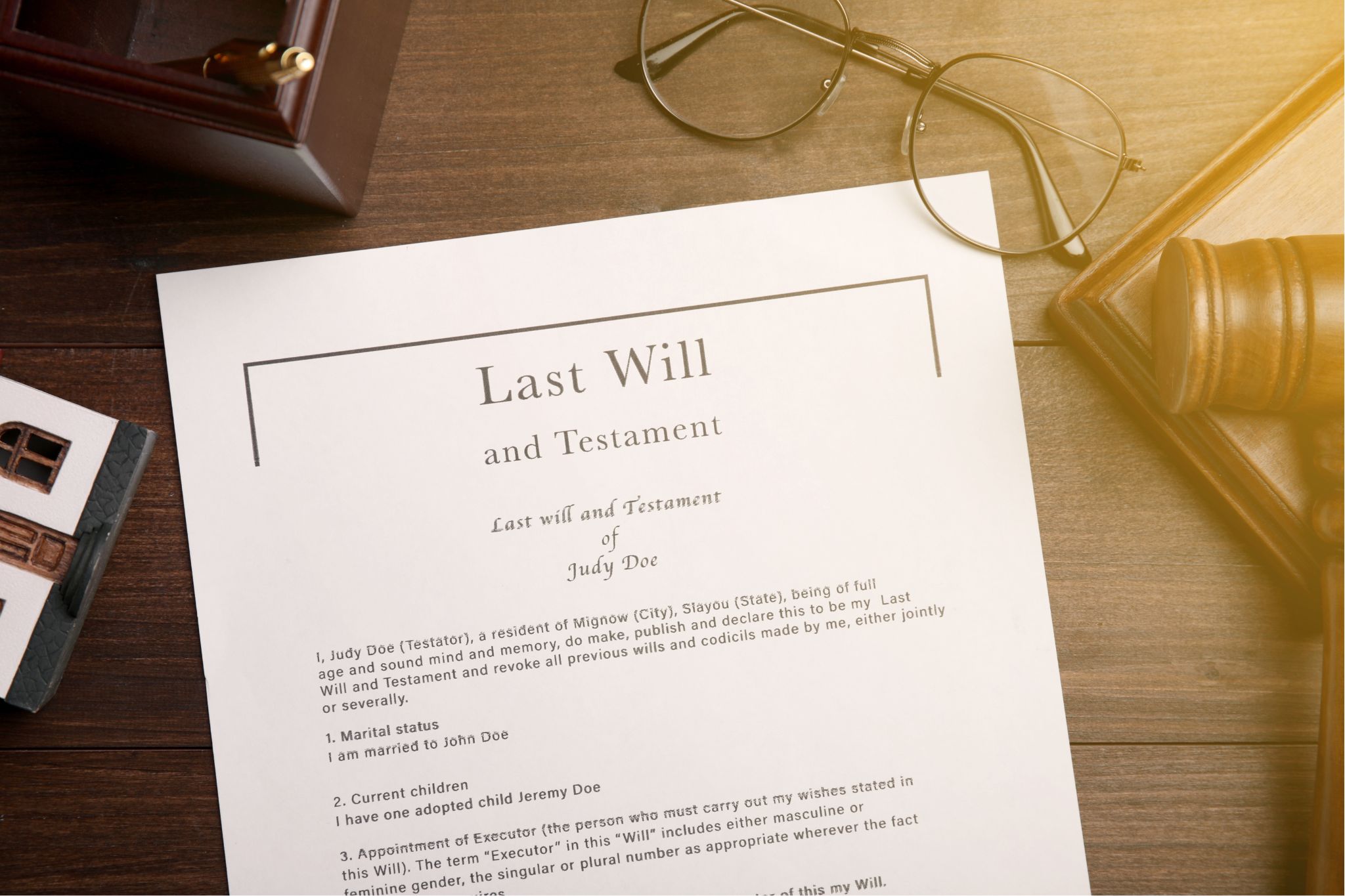
Your mother died in March. She lived in the same Omaha house for thirty years, and for the last two of them your sister moved in to help with medications, appointments, and the mail. At the funeral everyone assumed the estate would be split evenly, the way your mother had described it at every holiday since your father passed. Then the will surfaces. It was signed eleven weeks before she died, at a firm nobody in the family had heard of, and it leaves the house and the bulk of the accounts to your sister. The document naming all three children equally, the one your mother kept in the safe deposit box, is nowhere in the filing.
Families in this position want to know one thing first: can you contest a will in Nebraska, or is the signed document simply the end of the conversation? Nebraska law gives certain people the right to challenge a will, but the right is narrow, the grounds are specific, and the clock is shorter than most families expect. Understanding what the Nebraska Probate Code actually requires is the difference between a claim worth bringing and an expensive expression of grief.
Who has the legal right to contest a will in Nebraska?
Nebraska does not let just anyone object to a will. The Probate Code limits participation to an “interested person,” defined at Neb. Rev. Stat. sec. 30-2209(21) to include “heirs, devisees, children, spouses, creditors, beneficiaries, and any others having a property right in or claim against a trust estate or the estate of a decedent, ward, or protected person which may be affected by the proceeding.”
Two categories cover most real disputes. The first is a person who would inherit under Nebraska’s intestacy rules if the will were thrown out, typically a surviving spouse and the decedent’s children. The second is a beneficiary named in an earlier will who was cut out or reduced by the newer one. A cousin who was never going to inherit under any version of the document generally lacks standing, however strongly they feel about the outcome.
Standing matters more than it sounds. If the contest succeeds and the challenged will falls, the estate does not automatically pass the way the objector hopes. An earlier valid will may control instead, or the estate may pass by intestacy. Before filing anything, a family should know exactly what distribution a successful contest would produce, because occasionally the answer is that the client does no better than the document they are attacking.
What are the legal grounds for contesting a will in Nebraska?
Disliking the result is not a ground. Nebraska recognizes a defined set of challenges, most of them collected in Neb. Rev. Stat. sec. 30-2431.
Lack of testamentary capacity
A person must have been of sound mind when the will was signed. Nebraska measures that by whether the testator understood the nature of the act of making a will, knew the extent and character of their property, understood the proposed disposition of that property, and knew the natural objects of their bounty. Each element is assessed at the moment of execution rather than across the illness generally, which is why a dementia diagnosis alone does not decide the question. Someone with significant cognitive decline can still sign a valid will during a lucid interval, and someone with no formal diagnosis can lack capacity on the day in question.
Undue influence
This is the most common claim in Omaha estate litigation and the hardest to prove. Nebraska requires the contestant to establish four elements, stated by the Nebraska Supreme Court in In re Estate of Hedke, 278 Neb. 727, 775 N.W.2d 13 (2009): that the testator was subject to undue influence, that the alleged influencer had the opportunity to exercise it, that the influencer had a disposition to exercise it for an improper purpose, and that the result appears to be the effect of that influence.
All four are required. Proof that an adult child was the primary caregiver and received the largest share establishes opportunity and a suspicious result, and stops well short of a verdict. Courts expect evidence that the caregiver’s will was substituted for the testator’s own.
Families often arrive believing that a confidential relationship shifts the burden onto the person who benefited. Nebraska law is less generous than that. In In re Estate of Clinger, 292 Neb. 237, 872 N.W.2d 37 (2015), the Supreme Court held that the so-called presumption of undue influence is a permissible inference rather than a true evidentiary presumption, and that the ultimate burden of persuasion stays with the contestant throughout. Once the will’s proponent puts on rebutting evidence, the inference loses its force and the contestant must still carry the case.
Fraud, duress, and mistake
Section 30-2431 also lists fraud, duress, and mistake. Fraud covers a will procured by lies about the document or about the beneficiaries, such as convincing a parent that a child had stolen from them or had refused to visit. Duress involves threats or coercion. Mistake reaches situations where the testator did not understand what they were signing at all.
Revocation
A will that was validly executed can still be revoked later, by a subsequent will or by physical destruction with intent. When a family knows a later document existed and cannot locate it, revocation becomes a live issue and the evidence turns on what happened to the original.
Improper execution
Formal defects are the cleanest ground when they exist. Neb. Rev. Stat. sec. 30-2327 requires that a will be in writing, signed by the testator or by another in the testator’s presence and at their direction, and signed by at least two individuals who witnessed the signing or the testator’s acknowledgment. Holographic wills are treated separately. Do-it-yourself and download-a-form wills fail this requirement more often than professionally drafted ones, which is a recurring theme in Nebraska probate litigation.
Who has to prove what in a Nebraska will contest?
Burden allocation decides more cases than most families realize, and Neb. Rev. Stat. sec. 30-2431 sets it out directly. Proponents of a will carry the burden of establishing prima facie proof of due execution, death, testamentary capacity, and venue. Contestants carry the burden of establishing undue influence, fraud, duress, mistake, or revocation. Each party holds the ultimate burden of persuasion on the matters where it started with the burden of proof.
Read that allocation closely, because it splits in a way that favors different parties on different issues. Capacity sits with the person offering the will, so a contestant attacking capacity is arguing that the proponent failed to carry a burden the proponent already had. Undue influence sits with the contestant from start to finish. A single Omaha will contest frequently runs both theories, and each travels under its own rules.
The Nebraska Supreme Court applied this framework recently in In re Estate of Walker, 315 Neb. 510 (2023), where a son offered a will signed shortly before his mother’s death that named him the sole beneficiary and omitted his three brothers. The county court refused to admit it. On appeal, the Supreme Court held that a prior will was admissible and relevant because it tended to show a constant and abiding scheme for distributing the property, which cuts against claims of undue influence and incapacity. The practical lesson runs both directions: a long, consistent pattern of estate planning is powerful evidence, and a sudden late-life departure from that pattern invites scrutiny.
How long do you have to contest a will in Nebraska?
The deadline depends on how the will entered probate, and this is where families lose otherwise viable claims.
Most Nebraska estates open through informal probate, a largely administrative process handled in the county court where the decedent lived. Under Neb. Rev. Stat. sec. 30-2408, a proceeding to contest an informally probated will may be commenced within the later of twelve months from the informal probate or three years from the decedent’s death. The same section imposes an outside limit: no informal probate, appointment proceeding, or formal testacy proceeding may generally be commenced more than three years after death.
Formal probate runs on a different and much faster track. When a personal representative petitions for formal testacy, interested persons receive notice of a hearing date, and objections belong before the court at that hearing. A family that receives a probate notice in the mail and sets it aside for a few months can find the order entered and the window closed.
Anyone in Omaha or elsewhere in Nebraska who suspects a problem with a will should treat the arrival of any probate paperwork as the start of a deadline rather than as an update. Verifying which track the estate is on takes a lawyer very little time.
Does a no-contest clause stop you from challenging the will?
Many wills contain a clause stating that anyone who challenges the document forfeits whatever it left them. These provisions frighten beneficiaries into silence, and in Nebraska they carry less force than their language suggests.
Neb. Rev. Stat. sec. 30-24,103 provides that a provision in a will penalizing an interested person for contesting the will or instituting other proceedings relating to the estate “is unenforceable if probable cause exists for instituting proceedings.” A beneficiary with a genuine, factually supported basis to challenge the document does not automatically lose their bequest by raising it. A beneficiary who files on suspicion alone, with nothing behind it, takes a real risk. The clause rewards investigation before filing rather than after.
What evidence decides these cases?
Nebraska will contests are won on records assembled early. Medical charts and physician notes from the weeks surrounding the signing establish or defeat capacity. The drafting attorney’s file, including intake notes and any record of who drove the testator to the appointment and who sat in the room, speaks directly to undue influence. Bank and brokerage statements showing transfers, added signatories, or new powers of attorney in the same period often tell the story more plainly than any witness. Prior wills and estate planning files establish whether the challenged document was a departure or a continuation.
Witnesses matter too, and memories fade. Neighbors, home health aides, church members, and the attesting witnesses themselves can describe the testator’s condition and the family dynamics at the relevant time. Locating those people two years after a death is materially harder than locating them two months after one.
Frequently Asked Questions
Can I contest a will in Nebraska just because it seems unfair?
No. Nebraska allows a testator to distribute property unequally, to disinherit an adult child, and to make choices the rest of the family considers wrong. A contest requires one of the recognized grounds, such as lack of testamentary capacity, undue influence, fraud, duress, mistake, revocation, or a defect in execution. Unfairness supplies the motive to look, and something more supplies the claim.
My mother had dementia when she signed. Does that win the case?
Not by itself. Nebraska evaluates testamentary capacity at the moment of execution, so a diagnosis is evidence rather than an answer. What matters is whether she understood the nature of making a will, the extent of her property, the disposition she was making, and who her natural heirs were on that day. Medical records close in time to the signing usually drive the outcome.
Does the person who benefited have to prove they did not pressure my father?
No, and this surprises most families. Under In re Estate of Clinger, the presumption of undue influence in Nebraska operates as a permissible inference, and the ultimate burden of persuasion remains with the contestant. Evidence of a confidential relationship and suspicious circumstances helps the contestant get to trial and does not transfer the burden to the beneficiary.
Will I lose my inheritance if I challenge the will and lose?
That depends on the document and on your reasons for filing. Under Neb. Rev. Stat. sec. 30-24,103, a no-contest clause is unenforceable where probable cause existed for bringing the proceeding. Having a lawyer assess the strength of the evidence before anything is filed protects the bequest as well as the claim.
How much does a will contest cost in Omaha?
Cost tracks the scope of the dispute, the volume of medical and financial records, and whether expert testimony on capacity is needed. Many Nebraska estate disputes resolve in mediation or negotiated settlement well before trial. An early assessment of the merits is the cheapest step in the process and frequently the one that saves the most money.
Talk to a Nebraska estate litigation attorney
If a will was signed during a parent’s final illness, departs sharply from what the family understood, or benefits the person who controlled access to them, Horgan Law LLC can help. Our attorneys handle contested probate and estate disputes throughout Nebraska, and the firm has published a detailed Nebraska trust and estate dispute litigation research brief covering the governing standards in depth. Contested estates are litigation, and we approach them with the same preparation we bring to any complex litigation matter.
Deadlines in Nebraska probate run from filings you may receive in the mail, so early advice preserves options that later advice cannot. Contact us at 402-965-0652 or visit horganlawfirm.com/contact-us
This article provides general information about Nebraska law and does not constitute legal advice or create an attorney-client relationship.